


How Thick Should Floating Staircase Treads Be?


One of the most common questions homeowners ask when designing a floating staircase is how thick the stair treads should be.
Unlike traditional staircases, floating staircases place much more visual emphasis on the treads themselves. Because much of the structural support is hidden from view, the treads become one of the most noticeable design features in the entire staircase.
The answer is not always as simple as selecting a tread thickness based on appearance alone. Stair geometry, building code requirements, construction methods, material selection, and overall design goals all influence the final thickness of the treads.
In this article, we'll discuss common floating staircase tread thicknesses, why many custom staircases utilize thicker treads, and the differences between solid hardwood, hollow box, and MDF-core tread construction.
Why Tread Thickness Matters
When homeowners first begin researching floating staircases, they often focus on the overall style of the staircase. However, one of the most important design decisions is often overlooked: tread thickness.
Because the structural support of a floating staircase is largely concealed, the treads become one of the most visually dominant elements in the entire system. Unlike a traditional staircase where stringers, risers, and other structural components are visible, a floating staircase places much greater emphasis on the treads themselves.
Thicker treads typically create a more substantial and architectural appearance. They draw the eye, establish visual weight within the room, and often become a focal point of the space. Thinner treads can create a lighter, more minimalist appearance, but they may not provide the same visual impact.
Tread thickness can also influence the overall proportions of the staircase. In many homes, thicker treads create a more balanced appearance when paired with taller ceilings, open floor plans, and modern architectural features.
In addition to aesthetics, tread thickness can influence how the staircase feels underfoot. While proper engineering is ultimately responsible for structural performance, many homeowners appreciate the solid feel and confidence that thicker hardwood treads provide.
Most custom floating staircases utilize a steel monostringer or steel support system beneath the treads. If you're unfamiliar with this construction method, our guide explaining What Is a Monostringer Staircase and How Does It Work? provides a detailed overview of the system.
Common Floating Staircase Tread Thicknesses
Floating staircase treads are available in a variety of thicknesses, and the ideal thickness depends on factors such as stair geometry, design goals, construction methods, and material selection.
There is no single tread thickness that is correct for every project. The appropriate thickness is determined during the design process after evaluating the space, structure, and overall goals of the staircase.
In custom residential applications, treads in the 3.5-inch to 4-inch range are commonly used because they help create the substantial architectural appearance many homeowners desire while also working well with typical residential stair geometry.
At Iron Timbers, our floating staircases typically utilize solid hardwood treads approximately 3.5 inches thick. This profile creates a balanced visual appearance while maintaining the clean, open look that floating staircases are known for.
Ultimately, tread thickness should be evaluated as part of the overall staircase design rather than as an isolated specification.

Why Most Floating Staircase Treads End Up Around 3.5" to 4" Thick
While homeowners often ask what tread thickness is best, the reality is that tread thickness is frequently influenced by the overall geometry of the staircase.
In most residential applications, the rise between treads falls somewhere around 7 to 8 inches, with approximately 7.5 inches being very common. Building codes also typically require that openings within the staircase remain 4 inches or smaller.
Because of this relationship, tread thickness becomes an important design consideration. A thicker tread helps reduce the visible opening between steps while maintaining the clean, open appearance that homeowners expect from a floating staircase.
For this reason, many custom floating staircases utilize treads that fall within the 3.5-inch to 4-inch range. At Iron Timbers, most of our floating staircases feature solid hardwood treads approximately 3.5 inches thick because that thickness works well with common residential stair geometry while creating a substantial architectural appearance.
Many homeowners assume tread thickness is simply a design preference. In reality, factors such as stair geometry, floor-to-floor height, rise dimensions, and code requirements often play a significant role in determining the final tread profile.
Rather than selecting tread thickness based solely on aesthetics, designers must balance appearance, structural considerations, and code compliance to create a staircase that feels both functional and visually proportional.
The result is a staircase that feels balanced, substantial, and architecturally refined while still maintaining the open appearance that floating staircases are known for.
Solid Hardwood vs Hollow Box and MDF-Core Treads
Not all thick floating staircase treads are constructed the same way.
Many homeowners are surprised to learn that two staircases with identical tread thicknesses may be constructed completely differently.
Some manufacturers utilize hollow box treads. These products are designed to create the appearance of a thick tread while reducing material usage and weight. When viewed from the side, the tread appears substantial, but the interior may be hollow.
Other manufacturers offer engineered treads built around MDF or similar composite cores that are wrapped in a hardwood veneer. These systems can create a convincing appearance and may offer cost advantages, but the visible hardwood surface represents only a portion of the overall tread construction.
From across the room, a solid hardwood tread, hollow box tread, and MDF-core tread may appear nearly identical. However, the internal construction can be dramatically different.
Homeowners researching floating staircases should understand not only how thick a tread appears, but also how it is actually built. The materials beneath the surface ultimately influence durability, longevity, weight, and overall construction quality.
For homeowners seeking authentic hardwood construction, solid hardwood treads remain one of the most sought-after options because the material is consistent throughout the entire tread.
Solid hardwood treads are different because the entire tread consists of the same wood species throughout its thickness. Whether the tread is white oak, walnut, maple, or another hardwood, the material remains consistent from top to bottom.
Many homeowners prefer solid hardwood construction because of its authenticity, durability, and ability to showcase the natural beauty of the wood throughout the entire tread.
When comparing staircase systems, understanding how the tread is constructed can be just as important as understanding how thick it appears.
Material selection is just as important as tread construction. If you're comparing hardwood options, our article on How to Choose the Best Wood for Floating Staircase Treads explains the most common species used in custom staircases.
Does Tread Thickness Affect Safety?
A common misconception is that thicker treads automatically make a staircase safer.
In reality, safety is determined by the staircase system as a whole. Engineering, attachment methods, structural support, material quality, and proper installation all play a much larger role than tread thickness alone.
While thicker treads may feel more substantial underfoot, properly engineered floating staircases can perform safely across a variety of tread thicknesses.
The most important factor is ensuring that the staircase has been designed to properly transfer loads into the structure of the home.
We discuss this topic in greater detail in our article covering Are Floating Staircases Safe?
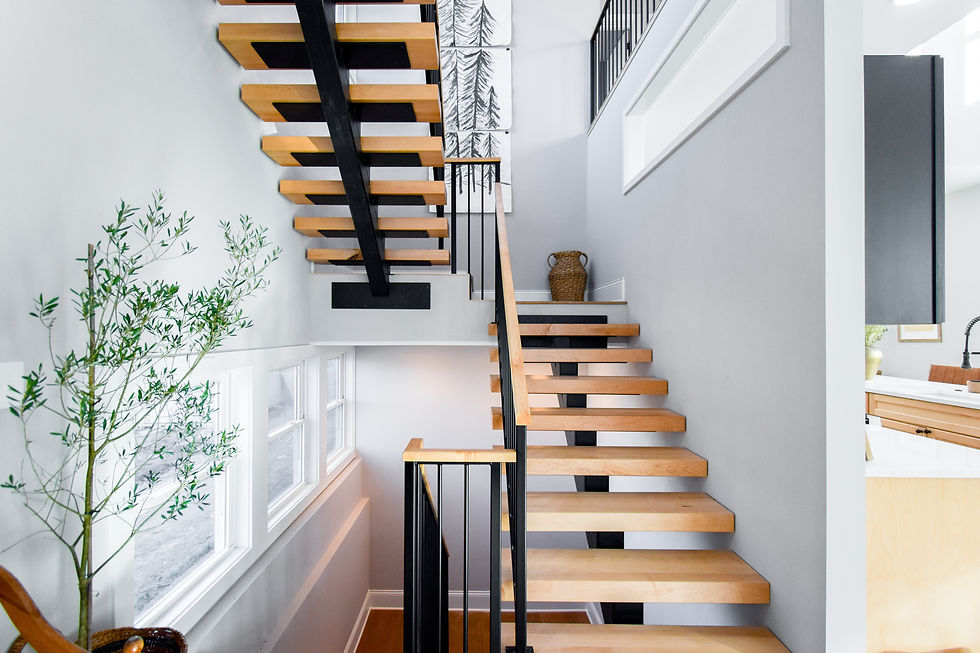
How Tread Thickness Impacts Staircase Design
Tread thickness influences more than just structure.
It also affects:
Visual weight
Staircase proportions
Sight lines
Overall appearance
Architectural style
A staircase with thicker treads often creates a bold architectural statement and can become a focal point of the home. In contrast, thinner treads typically create a lighter and more minimalist appearance.
Neither approach is necessarily better than the other. The right solution depends on the goals of the project and the style of the home.
Because floating staircases place so much emphasis on the treads themselves, selecting the appropriate thickness is an important part of achieving the desired final look.
Choosing the Right Thickness for Your Project
There is no universal answer when it comes to floating staircase tread thickness.
The ideal thickness depends on several factors including:
Floor-to-floor height
Stair geometry
Design preferences
Material selection
Budget
Construction method
Many homeowners are initially surprised to learn that tread thickness is often determined by the overall staircase design rather than simply personal preference.
A staircase with a typical residential rise frequently benefits from treads in the 3.5-inch to 4-inch range because of the relationship between tread thickness, stair geometry, and code requirements.
At the same time, design goals still matter. Some homeowners prefer the substantial appearance of thick solid hardwood treads, while others prefer a thinner contemporary aesthetic.
The best solution is ultimately determined during the design process after evaluating the space, structure, and goals of the project.
Tread thickness is only one factor that influences the total cost of a floating staircase. Material selection, staircase configuration, railing design, and installation requirements can also significantly affect pricing. Learn more in our guide: How Much Does a Floating Staircase Cost?

FAQ Section
Frequently Asked Questions
What is the most common thickness for floating staircase treads?
Many custom floating staircases utilize treads in the 3.5-inch to 4-inch range because they work well with common residential stair geometry and create a substantial architectural appearance.
Why are many floating staircase treads approximately 3.5 inches thick?
A typical stair rise is often around 7.5 inches. Because building codes generally require openings smaller than 4 inches, tread thickness becomes an important factor in maintaining proper spacing between steps.
Are all 3.5-inch floating staircase treads made from solid wood?
No. Some manufacturers achieve thicker tread profiles using hollow box construction or engineered cores wrapped in hardwood veneer. When evaluating a staircase, it is important to understand both the visible thickness and the actual construction of the tread.
Are thicker floating staircase treads stronger?
Not necessarily. Strength depends on engineering, structural support, attachment methods, materials, and overall staircase design.
Are thicker floating staircase treads better?
Not necessarily. The ideal tread thickness depends on stair geometry, design goals, material selection, and construction methods. While thicker treads often create a more substantial appearance, the best solution varies from project to project.
Do thicker treads cost more?
Generally, yes. Increased material usage and fabrication requirements often increase overall project cost.
Can floating staircase treads be made from solid hardwood?
Yes. Many custom floating staircases utilize solid hardwood treads because of their durability, appearance, and authentic wood construction.
What Tread Thickness Is Right for Your Floating Staircase?
The ideal tread thickness depends on the design goals, materials, stair geometry, and structural requirements of the project.
While floating staircase treads are available in a variety of thicknesses, many custom systems ultimately fall within the 3.5-inch to 4-inch range because of the relationship between stair rise, code requirements, and overall staircase proportions.
Just as importantly, homeowners should understand how the treads are constructed. Two staircases may appear identical from a distance while utilizing completely different construction methods.
Understanding both tread thickness and tread construction can help ensure your floating staircase not only looks beautiful but performs as intended for years to come.
The right tread thickness is rarely determined by a single factor. Stair geometry, building code requirements, design goals, wood species, and construction methods all influence the final decision.
Understanding both tread thickness and tread construction can help homeowners make more informed decisions when evaluating floating staircase systems.
Ready to Design Your Floating Staircase?
Every staircase is unique. Our team can help you evaluate tread thickness, material selection, and construction methods to create a staircase tailored to your home.


Comments